welcome-home-blog-by-debbi-wilkes
By: Debbi Wilkes
The new season is definitely gaining speed and with it the amazing options for viewing every performance.
Today, thanks to the Internet, fans have multiple choices about where to get their latest skating fix, but I must confess, it hasn’t always been easy to follow your favorite skater. So … join me for a bit of history about how the partnership between broadcasting, media and skating actually began.
You ready? We’re going way back.
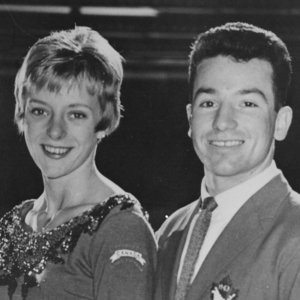
Debbi Wilkes and Guy Revell. Photo credit: Skate Canada
In 1960 I was just a baby bouncing off the rink boards with excitement about competing in Vancouver at my first World Championships. Outside of a North American event a year earlier, I had never skated internationally … at the time, no such thing as the GP Series or other international events existed … and here I was at the PNE Forum with my partner Guy Revell stepping on to the same ice as World and Olympic Champions.
At one level I was thrilled at the prospect of skating with my heroes; somewhere else, closer to the spot where my heart beat, I was terrified! I had almost no experience competing and was completely out of my element when it came to dealing with the media. To be honest, I wasn’t even sure what ‘media’ meant.
Back then, nearly 70 years ago … gulp … even the champions trained in obscurity. Figure skating stories and results were not front page news and the sport was rarely seen on TV. Skating was lucky if it was news at all, on a good day relegated to the back page of the sports section of the daily newspaper.
Skating had its first shot at becoming a broadcast property back in 1955 during the North American Championships in Regina, Sask. The line-up of skaters was filled with Hall of Fame material … World Pair Champions and Torontonians Francis Dafoe and Norris Bowden, Barbara Wagner and Bob Paul, Otto and Maria Jelinek from Oakville/Bronte, Charles Snelling also from Toronto, and from the USA, Carole Heiss, Tenley Albright and the Jenkins brothers, David and Hayes Alan, who between them were World Champions for 7 years!!
A gentleman by the name of Bert Penfold headed up the Organizing Committee (later Bert would become President of the Canadian Figure Skating Association … now
Skate Canada).
Bert had an idea.
He convinced a local radio personality, a fellow by the name of Johnny Esaw, that it was an event worth covering. Johnny was a sports enthusiast and knew interest was building for the sport after Dafoe and Bowden won the World title. But he had no idea how to broadcast the competition on radio.
Together they came up with a plan; Johnny would air the event but Bert would have to tell what was happening!
Five years later and a couple of provinces west, Vancouver would become the focus of the skating world at the 1960 World Championships, the first time Canada had hosted the event since 1932 in Montreal.
By this time, Johnny Esaw had moved east to Toronto and into the booming television industry. As head of sports for the soon-to-be launched CTV network, it wasn’t long before he got a call from Roone Arledge, a sports producer for ABC in New York. After the successful TV coverage of the 1960 Olympics, Arledge wanted to cover the championships in Vancouver, but admitted to Johnny that if an American network bid for them, it would cost a fortune. On the other hand, if Johnny and a Canadian network bid for the rights, he could get them for ABC and CTV could have them too.
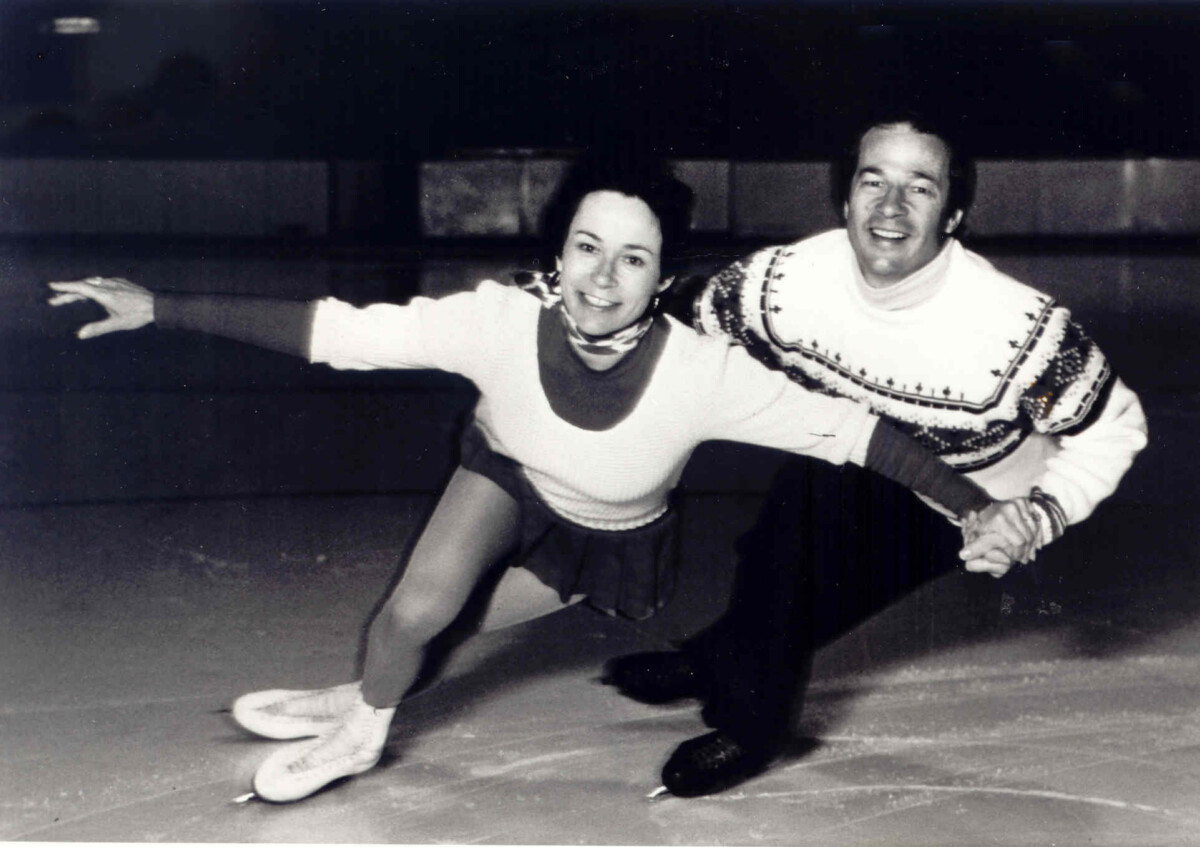
Maria and Otto Jelinek. Photo credit: Skate Canada
Esaw agreed and bought the rights for $10,000 … and for the first time, fans sitting in their living rooms watching TV were treated to the regular world of international competitive figure skating.
But it wasn’t only television that was watching.
With the 1961 World Championships the next year scheduled in Prague, for the first time behind the ‘iron curtain’, all eyes were on Otto and Maria Jelinek whose family had escaped some years earlier. It was a BIG political story; would they be granted entry to Czechoslovakia … and even BIGGER … would they be allowed to leave?
That story captured the imaginations of two great sports writers: Jim Proudfoot of the Toronto Star and George Gross of the Toronto Telegram. Ultimately, they both became huge skating fans and covered the sport for years.
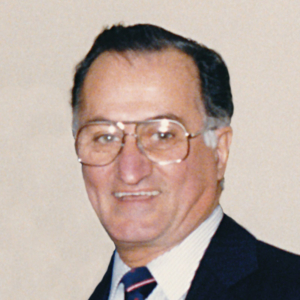
Johnny Esaw. Photo credit: Skate Canada
Could they tell you which jump was which? No … but what they did do was share the human side of the sport … the successes and failures … the emotional thrills and the disasters … and the gruelling training and expert planning it takes to get to the top of the sport. They made figure skating main stream and became the poster boys for how to cover the sport.
The rest of the world was pressured to catch up. Figure skating was becoming a hot item.
For the participants, life would never be the same!
(Next month: Part 2)

Previous Post
Member Spotlight: Napanee & District Skating Club
Never Miss an Update
Be the first to know about upcoming Skate Ontario events and special updates—subscribe today!
By submitting this form, you are consenting to receive marketing emails from: . You can revoke your consent to receive emails at any time by using the SafeUnsubscribe® link, found at the bottom of every email. Emails are serviced by Constant Contact



Monday – Friday
8:00 am – 4:00 pm