article
By: Pj Kwong
“An Olympic season is much more difficult with an extra event that only happens once every four years. Skaters are tired by the time Worlds starts so it is a huge accomplishment to finish the season with two good skates.” — Karen Butcher, Skate Canada President
Day 2 of the 2026 ISU World Figure Skating Championships in Prague reflected exactly that sentiment—resilience, determination, and the pursuit of excellence at the very end of a demanding Olympic season.
It is widely held that in an Olympic season especially, where physical and mental fatigue can accumulate, that message resonates even more deeply. Michael Slipchuk, Skate Canada’s High-Performance Director shared that the ‘Olympic Blues’ are a real thing, and you just never know how an athlete is going to perform at the post-Olympic Worlds. “Everyone took their time and got their rest after the Games and are here and ready to perform. This is not the end of the season but rather the start of the next quadrennial,” said Slipchuk.
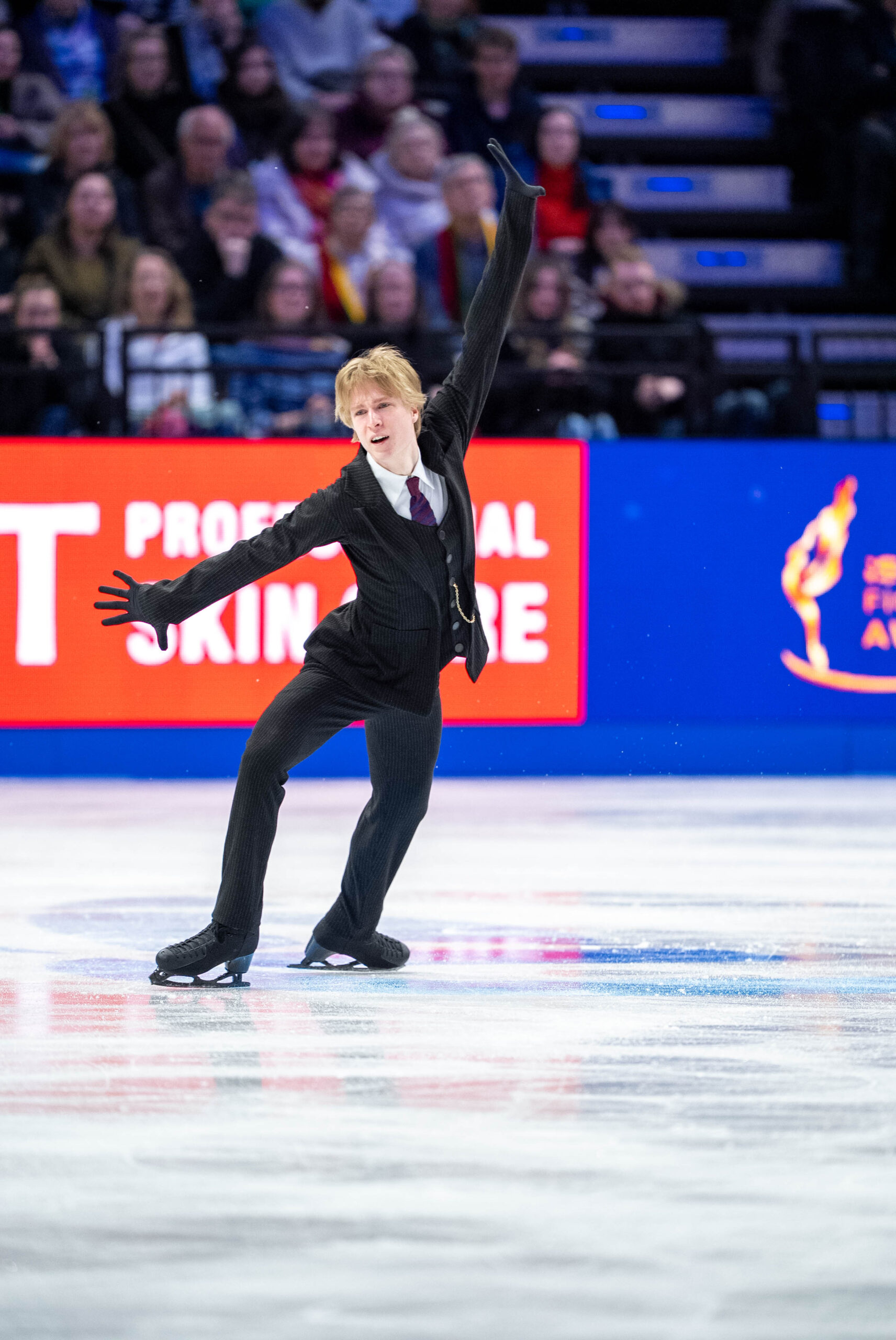
Photo: Tina Weltz Media
In the men’s event, Canadian champion Stephen Gogolev delivered a compelling short program In his Worlds debut that placed him fifth with a season’s best score in a tightly contested field. Skating to a program where he embodies a New York gangster, Stephen leaned into both character and choreography, bringing a sense of playfulness and edge to the ice. He also brought clean jumps, spins and other elements at the highest level. He later shared that the short program is one he genuinely enjoys performing, a factor that translated into confident execution and strong components.
I think that Stephen’s confidence was no doubt boosted by his outstanding Olympic fifth place finish and his collaboration with coach/choreographer Benoit Richaud. When asked about the significance of that relationship he talked about the fact that Benoit offers constant support and has played into Stephen’s mental game. At the end of the day, “I had the performance I really wanted to,” said Stephen.
I shared with Stephen that Prague is a lucky city for Canadian skaters. He hadn’t been aware of the legacy until I told him that the two men’s champions from the only other times that Worlds were staged here in 1962 and 1993 were Canadians: Donald Jackson and Kurt Browning, with Elvis Stojko taking the silver medal in 1993. Big skates to fill, I think he’s up to it and Stephen said “we’ll see” with a smile.
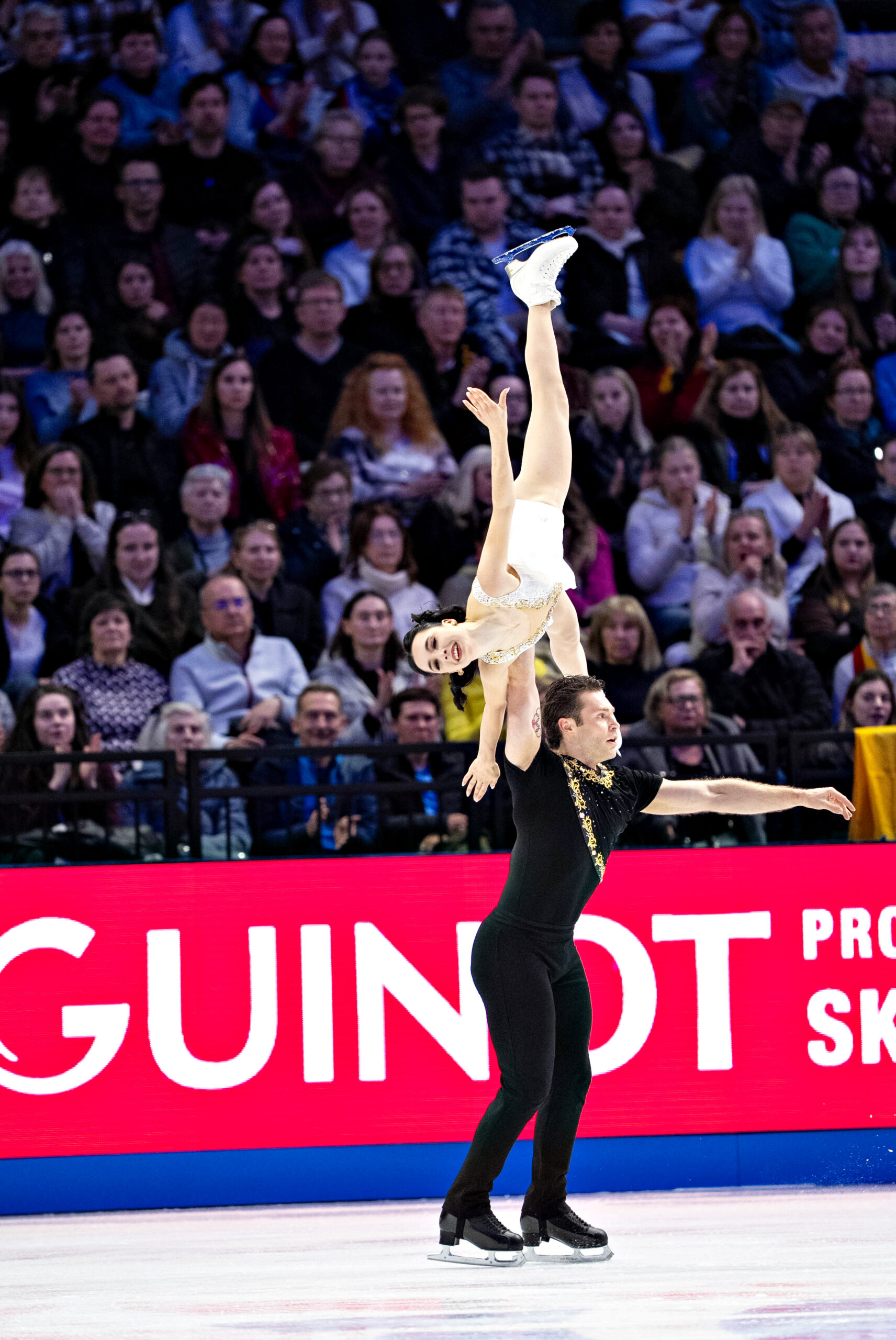
Photo: Tina Weltz Media
Lia Pereira and Trennt Michaud continued to build on their impressive season with their free skate final performance. After earning a standout third-place result in the short program, the duo once again demonstrated their ability to deliver under pressure and followed it up with their first World medal: a Bronze and a season’s best free skate. Their program to Gladiator carries both technical and emotional weight, drawing on themes of strength, resilience, and defiance.
The significance of Pereira and Michaud’s portrayal lies in the narrative of the characters they bring to life. Inspired by the story of Maximus—a warrior who endures loss, betrayal, and ultimately fights for honour—the program mirrors the journey of elite athletes navigating setbacks and striving for peak performance.
My content partner Debbi Wilkes who competed in the pair event in 1962 in Prague to a fourth-place finish was glued to her screen at home watching the pair event unfold. “There was some terrific pair skating tonight, but I always felt something was missing…until Lia and Trennt skated. Their Gladiator program told a story with intriguing and intentional choreography…not one step too many or too few…and with a path to elements that was as important as the element itself,” said Debbi in an email to me moments after they finished. “A program should say something and not be just a collection of tricks. What also shone? Their connection to each other and to the music was subtle and elegant. To me, that’s what skating should be!”
Lia and Trennt’s skating reflect not just technical mastery, but a shared commitment to perseverance and unity, qualities essential in both pairs skating and high-performance sport.
Stay tuned for more updates, behind-the-scenes moments, and athlete highlights throughout the week. We also want to know what you think. Did you see the Women and Pair events like we did? Follow along with my adventures in Prague and Debbi chiming in from home on Skate Ontario’s social media channels and join the conversation using #SkateOntarioProud and #SkONinPrague.
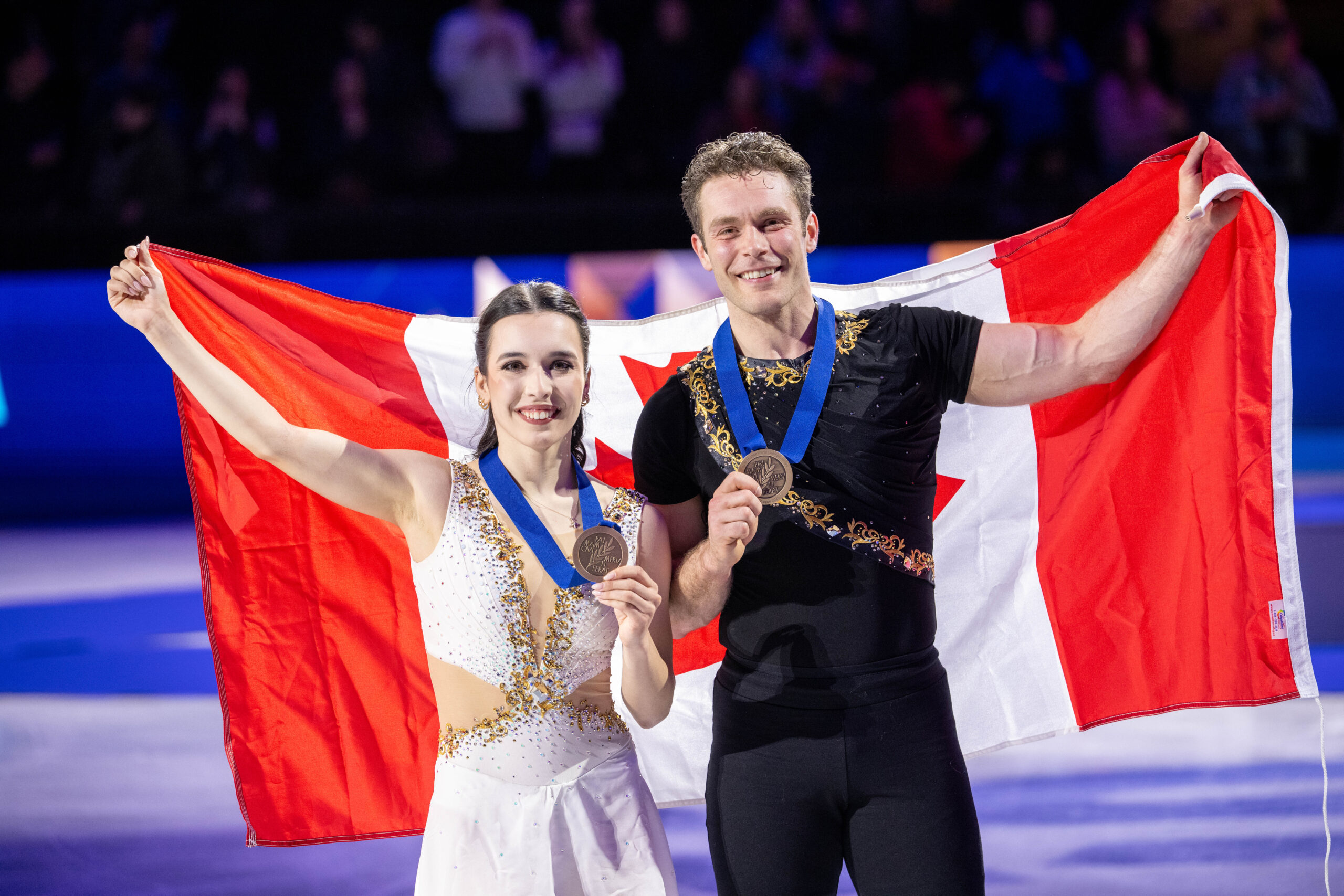
Photo: Tina Weltz Media

Previous Post
You say Skating – I say more – Prague Day 1
Never Miss an Update
Be the first to know about upcoming Skate Ontario events and special updates—subscribe today!
By submitting this form, you are consenting to receive marketing emails from: . You can revoke your consent to receive emails at any time by using the SafeUnsubscribe® link, found at the bottom of every email. Emails are serviced by Constant Contact



Monday – Friday
8:00 am – 4:00 pm