welcome-home-blog-by-debbi-wilkes
By: Debbi Wilkes
World and Olympic Coach Alison Purkiss was only 4 years old when she first stepped on the ice at the Brantford Skating Club in Brantford, a town west of Hamilton.
Figure skating was already part of her family’s history … her Mom, Celia, was a former competitor out of the Silver Blades club in Toronto, coached by Ozzie Colson and in Dance by John Briscoe. Eventually, learning to skate just seemed natural for Alison and for her three younger sisters, Laura, Jennifer and Vanessa.
For Alison, skating provided speed and independence, two things that she found thrilling. “Everyone should feel this,” she remembers thinking. Her skating love affair was so immediate, she would refuse to get off the ice, waving to her Mom as she flew around the rink.
By the time Alison was 11, her coach Joan Sherman, known lovingly as the ‘Purple Lady’, had already recognized Alison’s talent and proposed sending her to Kerry Leitch’s pair school in Cambridge near Kitchener, about a 45 minute drive away. Alison knew nothing about pair skating but was game for pair ‘try-outs’.
“That’s where I got my start in pair skating,” says Alison. Under the guidance of coaches Kerry Leitch and Linda Purdy, she began to learn the basics.
“It was so much fun and I LOVED it,” says Alison. “I was partnered with lots of different people in those first few weeks … and I tried everything … lifts, throws and death spirals … and I’m sure I was terrible at all of them. Everyone was so encouraging and I was excited to be in such a cool environment.”
At the time, Alison had her skates in two camps.
“I was very lucky that my Mom was able to drive me back and forth to Cambridge every day but I still went to school in Brantford and skated regularly at the local club with lessons from Mrs. Sherman.”
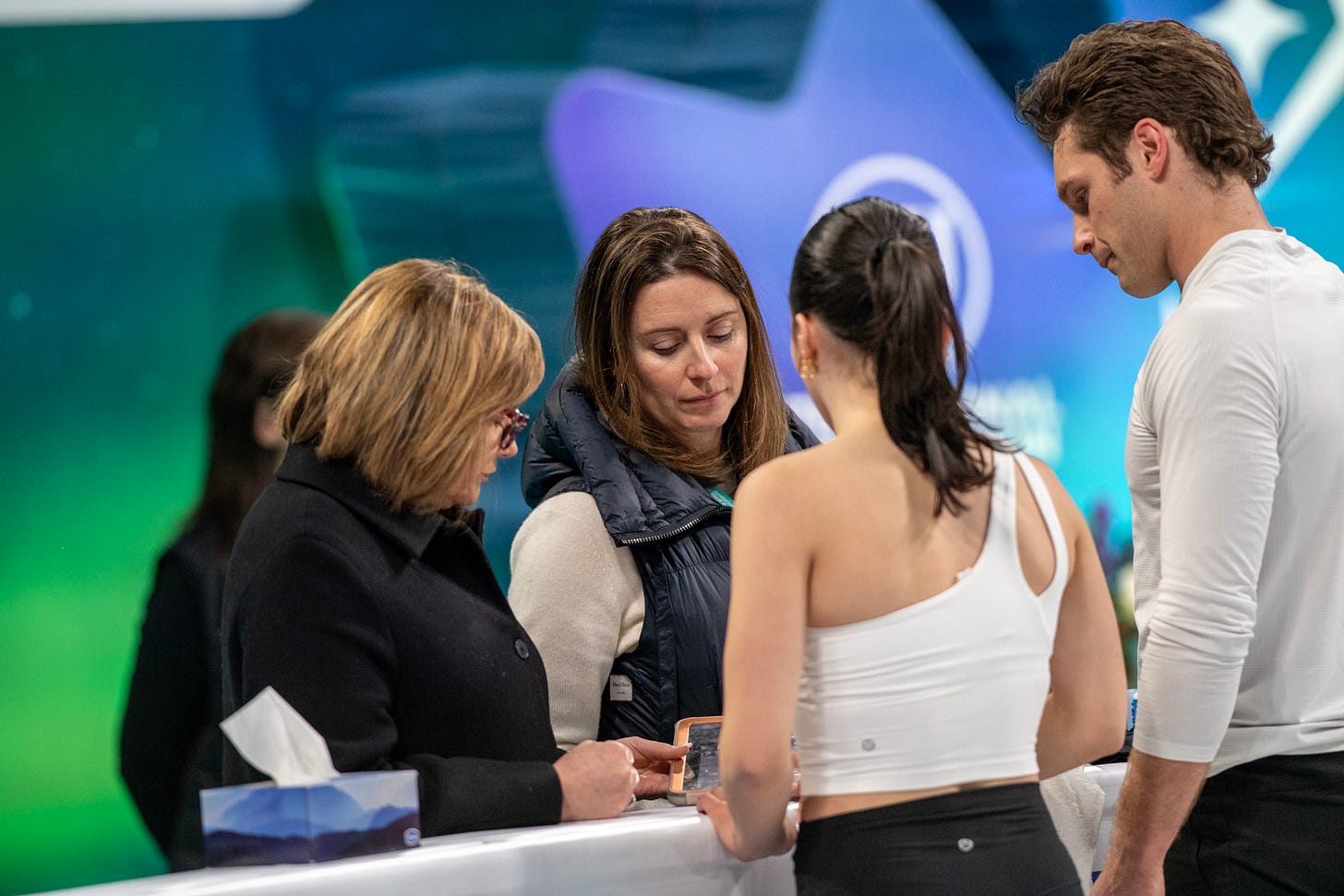
John Briscoe played an important role for her too. “John partnered me through all my dances,” remembers Alison, “and used to tease me that when I had my own children, he would have taught 3 generations! Skating is such a crazy cool world but it’s a pretty small circle when you get down to it!”
Looking back to those early days in the sport, Alison also remembers that Joan’s coaching went far beyond learning a particular figure or jump. “What was so beautiful about Mrs. Sherman’s relationships with her students was she cultivated this appreciation and thirst for knowledge about the sport. We’d come to the rink Monday morning after watching Nationals on TV and she would have a million questions … what was our favorite program … what had we learned … what made the biggest impression? She was interested in everything we had to say.”
That experience is something Alison tries to build with her own students although she recognizes it’s a different world today. “They all have their own devices in their hands and can watch clips on the ISU YouTube channel to access more and more figure skating stuff.”
As a youngster, Alison and her friends had skating viewing parties, but the experience for her students today is more remote. “They absorb information differently,” she says a bit wistfully. “I wonder if they get the same sense of community as I did … you know, watching together … talking about a certain program … analyzing a jump.”
Back in Alison’s competitive days, her first Nationals was in ’92 in Moncton competing in Novice Pairs. Because the senior events were Olympic qualifiers that year, the hype surrounding the championship was huge. “I watched Mike Slipchuk win,” she recalls.
“I also remember thinking this is a big show! I’d never seen the TV lights or the curtain or that many people watching a skating event … it was truly life changing.”
The next year at age 13 and after teaming with a new partner, Scott McDonald, the pair moved up to Senior at Nationals hosted by the city of Hamilton, close to home. “My family could come … there were lots of people around who I was familiar with.” Having her community close by was comforting.
Alison remembers skating first that year. “My poor partner, Scott, who is 9 years older than me, was terrified through our whole 6-minute warm-up … and I’m, like, star-struck just trying to watch everything that’s going on.” As an extra bit of excitement, the pair skated right before soon-to-be World Champions Isabelle Brasseur and Lloyd Eisler. Being on the same warm-up ice was inspiring.
That competition experience and the many that followed were the perfect education for when Alison retired from competing and made the move into coaching. Managing pressure cooker situations became a trademark of her coaching career.
Top of the must-do list?
Alison believes there is no better preparation than a lot of hard work.
If her athletes have good practices, she uses those experiences as key motivators during the weeks leading up to an event. “They can read my expression or I can give them that one word of wisdom from our past training that was particularly grounding for them or made them feel tough and organized and in the moment. We’ve done all the work … now I want them to enjoy it … and I’ve got the best seat in the house!”
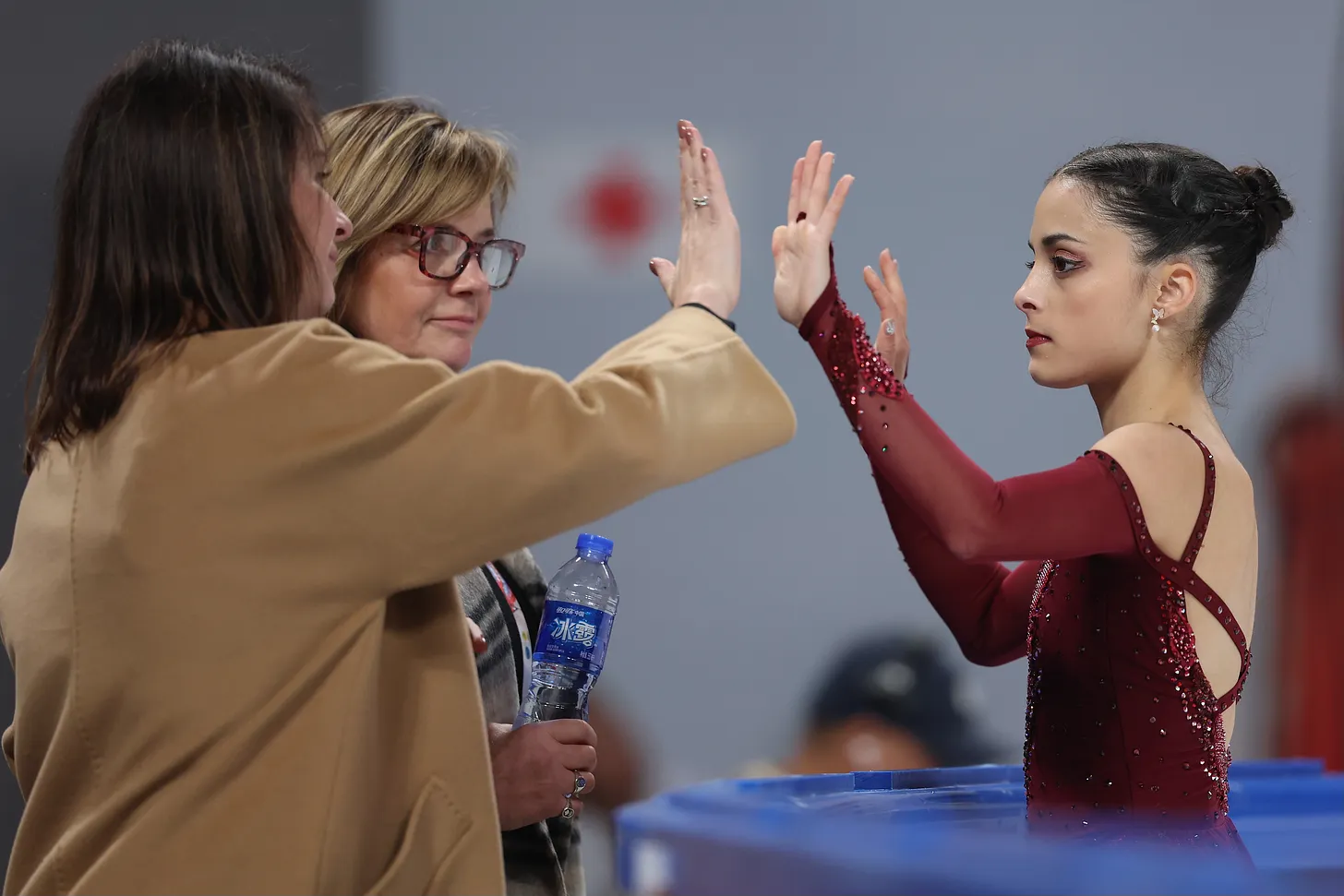
For Alison, the most challenging part of coaching is that every athlete is different. “What excites and motivates one athlete absolutely terrifies another … so you have to really know your athletes and pick your moments to get the best out of them.” Add to that, using the skills from some excellent sports psychologists has helped both Alison and her skaters. “They’re all sort of added ingredients into the stew.”
Since Covid and the heavy restrictions placed on close face-to-face interactions, Alison has changed her attitude about some traditional training methods particularly regarding communication opportunities. “Thanks to technology, everyone figured out Zoom and FaceTime and that cut down a lot of travel time and logistical problems. It definitely created a more personal approach than a normal phone call.”
During the pandemic, she and her skaters could access tons of new information and tools through on-line resources, speakers, tutorials and government support. “They were so valuable, I continue to use them today.”
At the same time, Alison saw a profound shift in how she regarded her athletes’ times away from the rink, whether due to injury, vacation or life. “I used to be really nervous about time off but I look at those breaks completely different now.”
She discovered that embracing time off allowed her athletes to be creative in their training even if it meant practising lifts off the ice in a parking lot. “You really got to know that if you rested your body and your mind, ate healthy food and stayed active, everything would come back just fine.” She adds, “While you’re away, live your life!”
Since Covid, Alison has embraced a new coaching model by joining forces with fellow coach Nancy Lemaire. “Coaching with Nancy has been one of my career highlights,” she admits. “It’s a great thing to realize your goals and get to the pinnacle of what you were hoping to achieve … but it’s something extra special to do it with a good friend by your side.”
Moving into the next Olympic cycle, Alison often thinks back to when she began in the sport and the inspiration she felt from her community and from other individuals in skating, a story she likes to share with her students. “I think it’s important to remind the next generation and put that into their ears.
“You may be performing in STARS ON ICE, doing meet and greets with fans or skating an exhibition somewhere.
“Take time with those little kids … it’s a big deal! You never know who you’re going to inspire.”

Previous Post
Let’s Talk About It: Gabrielle Daleman
Never Miss an Update
Be the first to know about upcoming Skate Ontario events and special updates—subscribe today!
By submitting this form, you are consenting to receive marketing emails from: . You can revoke your consent to receive emails at any time by using the SafeUnsubscribe® link, found at the bottom of every email. Emails are serviced by Constant Contact



Monday – Friday
8:00 am – 4:00 pm