welcome-home-blog-by-debbi-wilkes
By: Debbi Wilkes
Paul Poirier, World Dance medalist with Piper Gilles, was introduced to skating as a 3-year old when he was in Junior Kindergarten in suburban Toronto.
“We were just thrown on the ice to play hockey,” says Paul. “They’re like, play, get the puck in the net … but I had no idea how to skate! And with 4 other kids running for the puck, I figured I didn’t need to,” he laughs. “I wasn’t paying any attention to the game, so I spent all my time just trying to skate around by myself.”
As a wee one, Paul was also playing soccer when he discovered he hated team sports. “I found them boring … and at that age and at that level, there’s no sense of strategy.”

Photo Credit: CAN Fund
Team sports? No … but what Paul did enjoy were the weekly outings when his entire family would go public skating. “My Mom moved to Canada from South America back in the ‘80’s right when skating was celebrating things like ‘The Battle of the Brians’, with skating on TV all the time.” To Paul’s family, being Canadian meant you had to learn to skate.
Then Paul’s Mom suggested he take figure skating lessons. “My parents were never pushy about activities for me and my two brothers. They just wanted us to enjoy what we were doing … and apply ourselves to work hard at it.”
Paul was 5 at the time and considered the offer. “If I learn to figure skate, can I skate without a helmet?”
Paul’s first lessons were at the old Crosby Arena in Unionville at the Unionville Figure Skating Club. He took to it right away. “I loved that I could move at my own pace,” recalls Paul. He was in ‘Learn to Skate’ group lessons when the coach approached his parents about him taking private lessons.
One 15-minute lesson a week was how it all began.
“I loved the personalized attention and challenges … and then it was up to me to figure out how to do it,” Paul admits. “I’m still that same skater today. I love coming to the rink to figure out how to do something, how to make it better. That’s the part of the process that really interests me.”
Paul doesn’t actually remember a specific time when things got serious but when his coach was taking time off, she advised that skating at a more competitive club would help him progress. That found him at York Region Skating Academy among high level coaches and athletes.
“Suddenly I was in a much more competitive environment … where I was not the best,” Paul remembers. “That was motivating!”
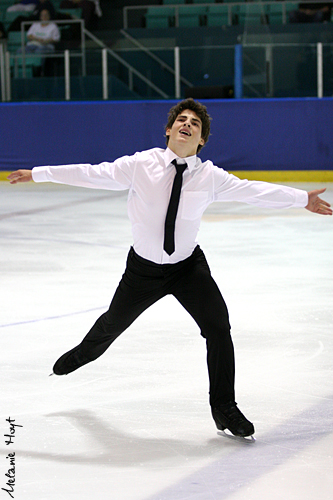
Photo Credit: Melanie Heaney on Flickr
Instead of skating occasionally, Paul was now skating 6 days a week. He calls it a process. “I wanted to do well so I worked very hard … and then the next year I’d move up a level.”
His progress was incremental. “It was gradual in terms of the commitment and the amount of time, but I do think the change in training environment really forced me to change my outlook, my kind of approach and my work ethic.”
One of the things he loved was the coaching of Canadian Champion Tracey Wainman. “Once or twice a week, Tracey would give theatre-on-ice classes,” says Paul. “The lights would be off, we’d have to improvise to music or adapt to some random idea.”
Paul recalls one such class where everyone had to pretend the ice was hot … that you had to touch the ice as little as possible … while Tracey played popcorn music!
“Looking back,” offers Paul, “that was a really remarkable part of my early days. I don’t think most skaters necessarily get those opportunities to skate like that or use their skating in that way or to explore skating in that way.”
At this point as a 9-year old, Paul was not the kind of child who dreamt of going to the Olympics. “I just really enjoyed skating. Yes, I wanted to do well because I prided myself in my work. I liked to work hard and I cared about what I was doing … but I never had big dreams for myself.”
How did he progress? “Opportunities came up … and I was willing to go along with them.”
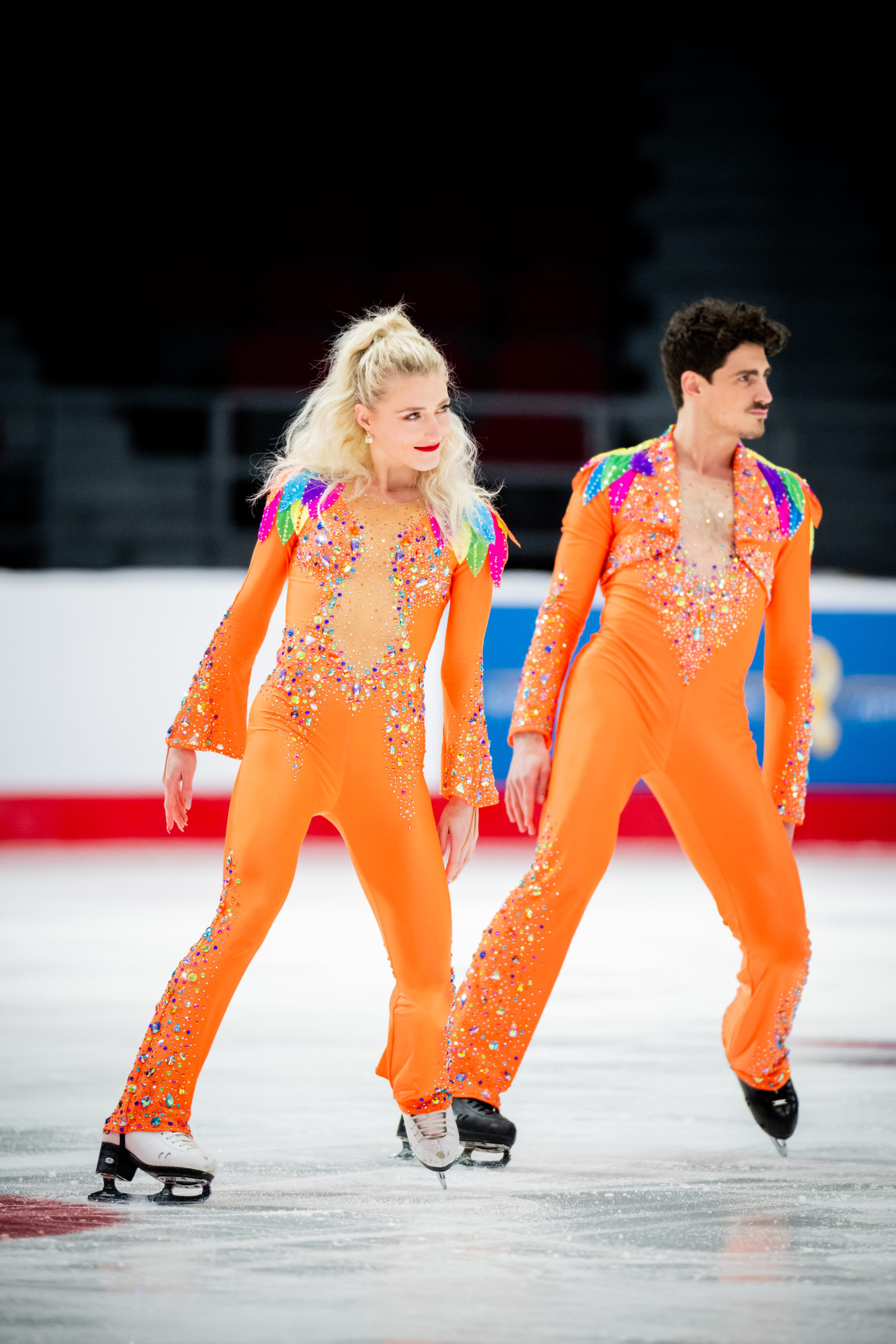
Initially, some of those opportunities were to compete in Singles, but it was through Paul’s success in passing his dance tests that his real future was determined. It was another favourite coach, Donna Iijima, who suggested I team up with another skater who was looking for a dance partner.” Paul thought, “Sure, why not? It was kind of an experiment for me.”
That skater was Vanessa Crone, Paul’s first partner.
With time, Donna also convinced the team to move to the dance program in Scarborough where they could train and witness more experienced teams coached by Carol Lane and Juris Razgulajevs. “We were amazed by the Novice and Junior teams,” says Paul. “They were so fast and impressive … and doing such interesting things. I thought it was so cool!”
At first, the team’s success was rather uninspiring, but when another decision had to be made about competing again at Pre-Novice or stepping up to Novice, the team made the move. Paul remembers, “I really wanted to move up to Novice … the primary reason was so I wouldn’t have to do the American Waltz anymore!”
At ages 11 and 12, Paul and Vanessa were a tiny team. “I remember feeling so out of place,” says Paul. “But that was the year when the switch flipped … I could see potential for ourselves … that we could do it.”
That was also the year of Paul’s first Free Dance. “A Free Dance finally … which I’d never done before … and with the creative part and storytelling part and all the other parts of Ice Dance which I really got to enjoy.”
As the team’s development continued and their coaching relationship with Carol and Juris expanded, Paul remembers a defining moment very clearly. He was 12. “The announcement that Vancouver had been awarded the 2010 Olympic Games was a turning point,” he recalls. “At the rink we were all talking about how amazing that was for Canada when Carol piped in … YOU WILL BE THERE.”
To Paul, it was a far-fetched idea … something he put on the back burner … something said as a passing comment. “We’d never even been to Nationals! And skating was just this extra thing I was doing for fun.”
Yet it was another step in a consistent theme throughout his entire career.
“Other people seemed to have this vision for me … and then in time allowed me to see it for myself,” says Paul. “At first you just stumble along and then, with time and opportunity, you can identify it … you get serious!”
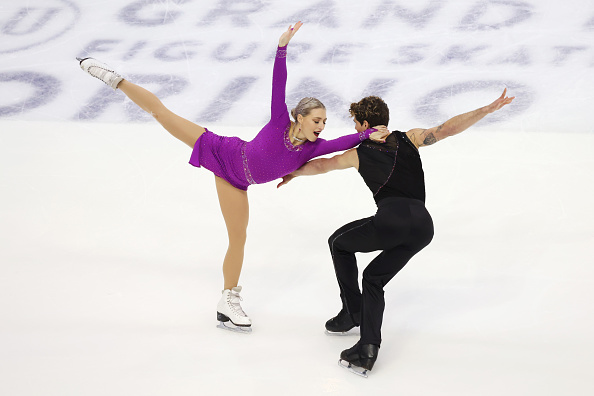
“One of the things I’m most grateful for,” adds Paul, “I was able to grow up in an environment where I always felt supported but not pushed. I mean that from my training environment and from my family. I know that’s not the case for everyone … not everyone has that privilege.”
The only requirement was that Paul apply himself to the best of his abilities.
“If others were going to sacrifice their time and invest in this project I wanted for myself, I had to be the first person invested.”
Although Vanessa and Paul’s partnership ended in 2011, the skating gods were waiting with another partner for Paul when Piper Gilles moved from the US. With a long string of national titles, international success and world medals since then, the pair has became one of Canada’s most successful dance teams.
Titles are certainly important to Paul, but it’s the team’s body of work of which he is most proud.
“That act of creation … you go into it blind. Suddenly, one day you hear a piece of music you want to use or you have a concept you want to explore. Then you show up at the rink … and you have to pull stuff out of a void to make something real!
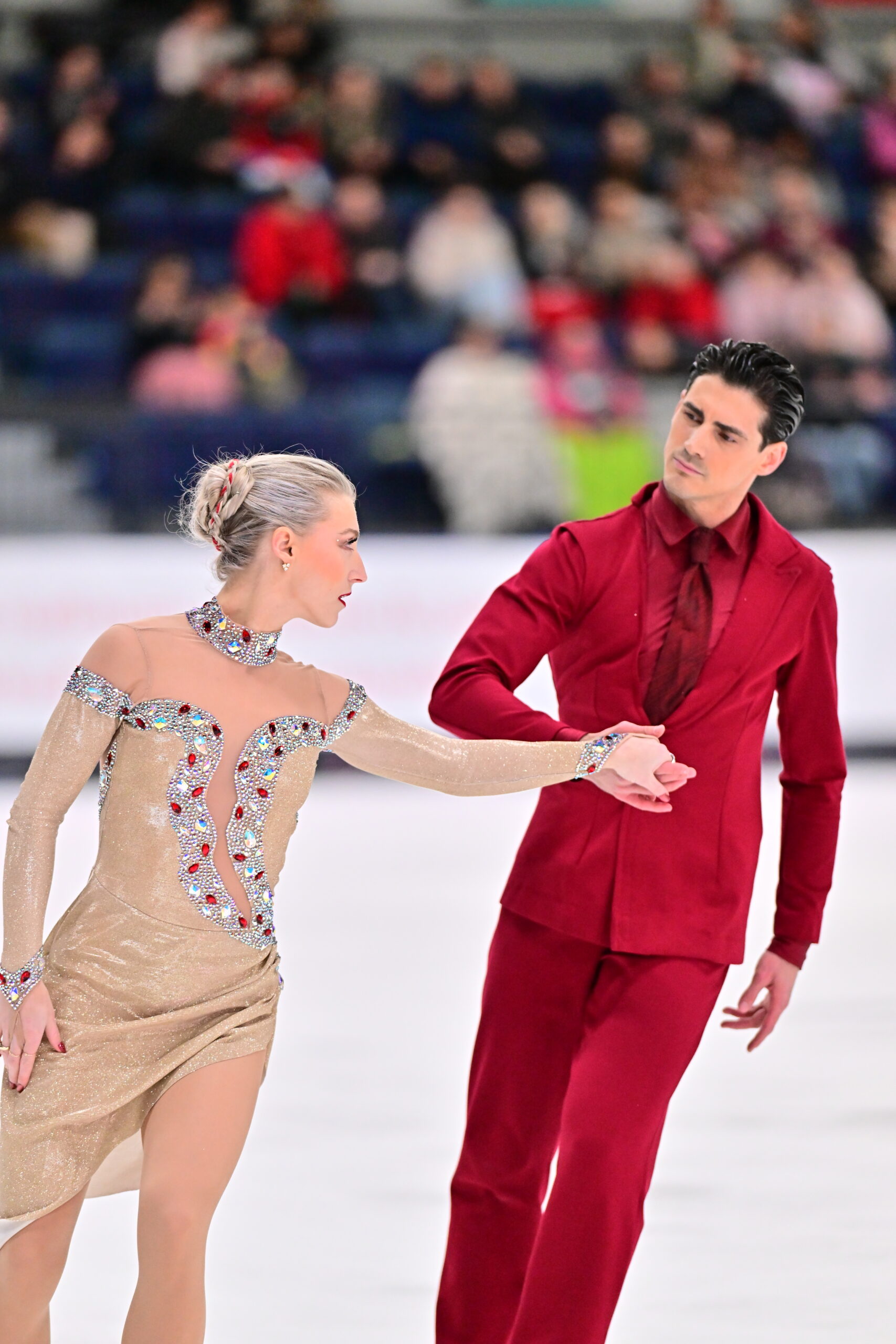
“I think of all the programs Piper and I have been able to create. All of the performances. All the things I’ve had the privilege of creating with the people I love.
“That process is magical!”


Never Miss an Update
Be the first to know about upcoming Skate Ontario events and special updates—subscribe today!
By submitting this form, you are consenting to receive marketing emails from: . You can revoke your consent to receive emails at any time by using the SafeUnsubscribe® link, found at the bottom of every email. Emails are serviced by Constant Contact



Monday – Friday
8:00 am – 4:00 pm